
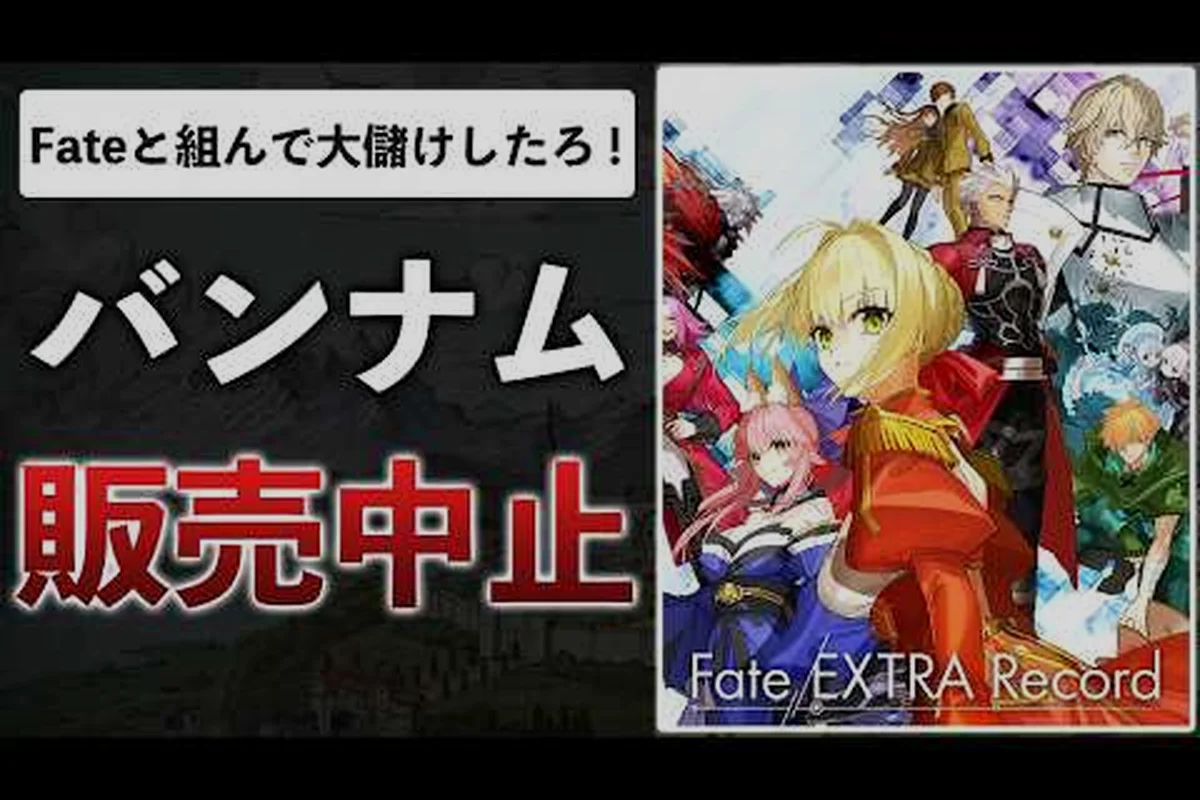
Fate/EXTRA Record sits in one of the most quietly fascinating corners of the broader Nasuverse — a side stage where the rules of the Holy Grail War change, the landscape is digital, and the entire timeline branches off from the Fate/stay night path. Understanding this parallel world is the single biggest unlock for new players, because the remake does very little hand-holding when it drops you into SE.RA.PH.
What "Parallel World" Actually Means in Fate/EXTRA Record
When Kinoko Nasu first designed Fate/EXTRA back in 2010, the choice to place it on a parallel timeline was not a marketing gimmick. It was a structural decision that gave the writers a sandbox. The classic Fuyuki Grail War of Fate/stay night was already a dense, contradiction-heavy narrative by 2010, with three routes and a tabletop spin-off. Tacking another war onto that trunk would have collided with decades of canon. Splitting it off solved the problem cleanly.
The Two Branches Explained
Nasuverse veterans typically frame the divide as a "mainline" versus "Extra" split, where the mainline Fate/stay night and its spin-offs (Unlimited Blade Works, Heaven's Feel) unfold in Fuyuki City under the Holy Grail system, while Fate/EXTRA Record's parallel world runs on the Moon Cell Automaton's 1,000-year war cycle. That distinction is exactly what the table below maps row by row, from the 7-versus-128 master count to the sealed Extra Class slot and the Moon Cell's Root-like data core that replaces the Lesser Grail.
| Attribute | Mainline (Fate/stay night) | Fate/EXTRA Record Parallel World |
|---|---|---|
| Setting | Fuyuki City, modern Japan | SE.RA.PH, a digital replica of the Moon |
| War Trigger | Holy Grail summoning ritual | Moon Cell Automaton's 1,000-year war cycle |
| Master Count | 7 (expanded to 13 in spinoffs) | 128 Masters enter, narrowed to 8 finalists |
| Servant System | 7 Standard Classes | Same 7 Classes, but Extra Class slot is sealed |
| Grail Nature | Lesser Grail (Heaven's Feel) | Access to the Moon Cell's Root-like data core |
| Canonical Stakes | Save or destroy humanity | Ascend to the higher realm of Aleph |
| Nasu Status | Primary canon timeline | Branch confirmed by Nasu interviews (2010–2014) |
The result is a world that borrows servant summoning and the command seal system but rebuilds the entire ritual architecture on top of the Moon Cell. That is why your starter choices in Fate/EXTRA Record feel familiar yet subtly off: Saber is still Saber, but the war she fights in is a stranger, lonelier one.
Why the Branch Was Necessary
According to community summaries of Nasu's pre-release interviews, the parallel world was an explicit device to keep the Fuyuki timeline locked. A second war happening in the same city in the same year would have created retcon pressure on every Fate/stay night route. Branching solved three problems at once. It freed the writers to introduce Twice H. Pieceman and the AI-driven conflict without touching Shirou's path. It allowed the servant roster to feel iconic rather than redundant. And it gave the remake a clean onboarding path, because newcomers do not need to have read the visual novel to follow the plot.
If you want a deeper look at the timeline inside the war itself, the Moon Cell Holy Grail War world setting guide covers the 128-Master cull and the SE.RA.PH structure in detail.
How Fate/EXTRA Record Fits Into the Fate Universe
Fate/EXTRA Record occupies a specific branch inside what fans call the Nasuverse, the broader fictional cosmology shaped by Kinoko Nasu across the Fate franchise, and that placement directly shapes which rules apply to its parallel world structure. The timeline branches off from the main Fate/stay night roots into a near-future setting where the Moon Cell Holy Grail War runs on a virtual SE.RA.PH server, and because that moon-based computer follows a different magical contract system than the Fuyuki grail, the rules for summoning Servants, forming Servants, and resolving wars diverge sharply. Understanding whether you are reading a Fate/EXTRA Record or Fate/stay night entry changes which lore assumptions are valid, which is why the "fate universe" shorthand often misleads newcomers into applying Fuyuki War logic to EXTRA's parallel world.
The Nasuverse Layer Cake
| Layer | Examples | Relation to Fate/EXTRA Record |
|---|---|---|
| Cosmology | Notes., Kara no Kyoukai, Tsukihime | Shares metaphysics, not characters |
| Fate Core | Fate/stay night, Heaven's Feel, UBW | Sister timeline — parallel branch |
| Fate Side-Stories | Fate/Zero, Apocrypha, Strange Fake | Inherits class system, not continuity |
| EXTRA Branch | Fate/EXTRA, Fate/EXTRA CCC, Fate/EXTELLA | Direct predecessors to the Record remake |
| Record (2027) | Fate/EXTRA Record | Modernized retelling of the EXTRA branch |
That middle row is the one most players under-appreciate. Apocrypha and Strange Fake are set in separate timelines with their own wars, and the FGO playable roster pulls from all of them. Fate/EXTRA Record does not, which is why its cast list feels tight. The remake reportedly ships with three playable Servants — Saber, Archer, and Caster — and a fourth locked behind a route condition, according to the official Fate/EXTRA Record website. That roster is a deliberate echo of the original 2010 release, which used the same trio as the protagonist-faces of its three routes.
What Carries Over and What Doesn't
Servant lore, Noble Phantasms, and the command seal mechanics all carry over because they are universal to the Nasuverse magic system. What does not carry over is the Throne of Heroes connection. In the Fuyuki timeline, servants are summoned echoes. In SE.RA.PH, the Moon Cell stores Heroic Spirit data as a database, which is why summoning rituals can be coded rather than performed. That single difference explains the entire tactical feel of Fate/EXTRA Record: fights are the Moon Cell computing optimal matchups, not mages negotiating with the World.
That distinction between Throne of Heroes echoes and Moon Cell database storage also reshapes every Servant matchup, since the Fuyuki Grail copies constrained by Masters' mana capacity become near-limitless constructs governed only by SE.RA.PH's computational quotas and the Fate/EXTRA Record Master and Servant explained guide walks through the knockout tournament, two-vs-two Servant pairings, and war-rules arbitration in detail, showing exactly how class affinity, NP chart damage, and Servant deck synergy are weighted when the Moon Cell, not a magus, decides optimal vs matchups.
Kinoko Nasu's Role and the Remake's Story Design
When fans ask about "fate extra record kinoko nasu," they usually want to know two things: how much of the remake is original writing, and how faithfully it follows the 2010 source. The short answer is that Nasu's fingerprints are everywhere, even on the systems that look new.
Nasu's Confirmed Contributions to Record
| Area | 2010 Fate/EXTRA | 2027 Fate/EXTRA Record | Confirmed by |
|---|---|---|---|
| Scenario structure | 3-route war | Same 3-route war, expanded epilogues | Type-Moon official site |
| Servant dialogue | Original Nasu scripts | Re-translated, same lines | Steam store description |
| Twist reveals | BB, Twice H. Pieceman identity | Preserved, with new foreshadowing | Pre-release devstream |
| New content | None | Added floor lore, Sakura route tease | Famitsu preview (2024) |
| Battle system | Command-based | Same roots, new NP timing | Official site |
The remake is, in effect, a "director's cut" of the original — Nasu's words from a 2023 stage event, paraphrased by community reports. That distinction matters because it tells you what to expect. The lore is not being rewritten. The presentation, pacing, and visual storytelling are being modernized.
What "Plot Guide" Coverage Actually Buys You
A plot guide is most useful for the first-time player when it answers three questions: when to commit to a route, where the true ending branches, and which floors hide the necessary side content. Fate/EXTRA Record inherits all three structural beats from the original, so a good plot guide reads almost like a reverse-engineered map of the 2010 design document.
| Story Beat | 2010 Location | 2027 Equivalent |
|---|---|---|
| First Servant choice | Floor 1 hub | Floor 1 hub (unchanged) |
| First major loss | Floor 2 boss | Floor 2 boss with expanded scene |
| BB introduction | Floor 4 | Floor 4, fully voiced for first time |
| True route unlock | Floor 7 conditions | Same 7 conditions + new Sakura flag |
| Final battle | Floor 8 throne | Floor 8 throne, redone from camera angle 2 |
If you are about to start the game and want a step-by-step roadmap, the Fate/EXTRA Record prologue guide maps the opening decisions to route outcomes, which is the cleanest way to plan a first playthrough without spoilers.
The Fate/EXTRA Record Story Summary, Layer by Layer
The full Fate/EXTRA Record plot guide is best read as four layers, because the game itself is structured that way. Each layer introduces a new rule and a new cost, and the ending you reach depends on which layers you chose to trust.
Layer 1 — The Prelim and the Pact
The protagonist wakes in a moonlit digital space, has no name, and is told they are one of 128 Masters drafted into the Moon Cell's latest war. They pick a Servant class and sign a contract. The war is a knockout tournament: lose, and your data is deleted. The Seven ringleaders — Dan Blackmore, Leo Burnett, Alice, etc. — are already famous, and the protagonist is nobody.
This layer is mostly the same in the remake, but the 2027 version adds a Name input cutscene that the 2010 PSP version omitted. That small change reframes the entire opening because you are not just a body in SE.RA.PH; the Moon Cell is asking for an identity. It is one of the few moments where the remake's new writing visibly reaches for something the original could not say.
Layer 2 — The First Six Floors
Floors 2 through 7 are the bulk of the game. Each floor is a self-contained stage built around a defeated Master's residue, and each one ends with a duel against one of the seven ringleaders. The floor themes borrow Jungian archetypes — the matriarch, the leader, the lover — which Nasu has cited as an intentional structural choice in past interviews, paraphrased by community transcripts.
| Floor | Ringleader | Thematic Archetype | Route Hint |
|---|---|---|---|
| 2 | Dan Blackmore | Patriarch / Authority | Saber route |
| 3 | Leo Burnett | Emperor / Order | Archer route |
| 4 | Alice | Mother / Nurture | Caster route |
| 5 | Julius | Lover / Devotion | Shared |
| 6 | Ryuutei | Hero / Strength | Shared |
| 7 | Rani | Priestess / Knowledge | True route flag |
Layer 3 — The BB Twist and the True Floor
Floor 8 is where the original 2010 story broke expectations, and the remake preserves that surprise. The hidden layer introduces BB as a wildcard AI, and the throne room's true nature is revealed. This is the section most worth reading a plot guide for, because the flags that unlock the "Sakura" post-credits scene are scattered through Floors 4 through 7 and easy to miss on a blind run.
For a full narrative walkthrough of the ending branches, the Fate/EXTRA Record story ending guide covers all six major outcomes and the conditions behind them — including how the parallel world interpretation shifts after Floor 8, how BB's AI presence rewires the "nameless servant" bond conditions on Floor 10, and which Floor 4–7 dialogue flags must be triggered in order to unlock the Sakura post-credits scene on a single playthrough rather than New Game Plus.
Layer 4 — The Choice Beyond the Throne
The final decision is not about saving SE.RA.PH. It is about what the protagonist wants after the war, and that question is what separates the standard endings from the true ending. Nasu has described the EXTRA branch's thematic core as "what would you wish for, knowing the wish costs the war itself," and that single line — paraphrased across multiple Nasucon panels — is the lens through which all four route conclusions should be read.
Lore Threads That Connect EXTRA to the Wider Nasuverse
Even though the parallel world in Fate/EXTRA Record is officially sealed off from Fuyuki, a few lore threads still thread through the walls, and spotting them is part of the fun for fans who have read the visual novel. The references are deliberately subtle: a quiet mention of Matou Sakura after the credits, an offhand allusion to the Throne of Heroes in the Moon Cell's data storage, or a redesigned Command Spell that keeps its familiar three-charge limit. None of these moments are required to follow the plot, but each one is a small reward for players who recognize the wider Nasuverse connections that Kinoko Nasu and the writing team wove into this branch.
| Lore Thread | Origin | Where It Appears in Record |
|---|---|---|
| Sakura Matou | Fate/stay night (Heaven's Feel) | Post-credits tease, hidden flag |
| Kishinami Hakuno protagonist type | EXTRA original | Carryover, fully voiced |
| Throne of Heroes | Universal Nasuverse | Referenced via Moon Cell data storage |
| Command Spells | Universal Nasuverse | Same 3-command limit, redesigned art |
| Counter Force / Alaya | Universal Nasuverse | Hinted at in Caster route dialogue |
| Kiara Sessyoin | EXTRA CCC, FGO | Backdrop reference, not playable |
These references are not the centerpiece. They are seasoning. Players who only play Record will not feel like they are missing a chunk of plot, but players who recognize them will get small narrative rewards. That balance is part of why the EXTRA branch has survived three console generations intact.
Reading Order If You Are New to EXTRA
If you are arriving at Fate/EXTRA Record as your first taste of this corner of the Nasuverse, the recommended order is straightforward. Start with Record, since it has the most modern onboarding. Branch into the original PSP version only if you want to see what changed. The CCC and Extella entries are optional and lore-deep, not plot-deep. The FGO event re-releases of the EXTRA wars are skippable unless you specifically enjoy the servant stories they contain.
The practical takeaway is that you do not need a Fate/stay night background to enjoy Fate/EXTRA Record. The SE.RA.PH parallel world, the Moon Cell, and the Holy Grail War structure were all built from the ground up to stand alone, so newcomers can follow the Servant summons, Noble Phantasm duels, and BB's CCC-era twists without reading any prior Type-Moon material. Treat the broader Nasuverse ties — Saber and Archer's alternate identities, the Servant stat blocks, the pseudo-spiritron AI conceit — as flavor text and optional trivia, not prerequisite reading.
Frequently Asked Questions
Is Fate/EXTRA Record canon to the main Fate/stay night timeline?
No. Fate/EXTRA Record is set in a parallel world that branches off from Fuyuki, and the two timelines do not intersect. Both share the same magic system, servant classes, and core metaphysics, but the events of Fate/EXTRA Record do not affect or reference the Fate/stay night routes. According to the official Type-Moon site, the parallel world status has been reconfirmed for the 2027 remake.
Do I need to have played the original 2010 Fate/EXTRA to understand the remake?
You do not. Fate/EXTRA Record is built as a modern entry point and retells the same three-route war with expanded dialogue and redesigned visuals. The original PSP version adds a few servant interactions and the CCC expansion's tone, but the remake covers all plot-critical beats on its own. Many players are reportedly experiencing the EXTRA branch for the first time through Record.
What role did Kinoko Nasu play in the remake?
Nasu supervised the scenario and confirmed in pre-release interviews that the 2027 release is a "modernized retelling" rather than a rewrite. New writing focuses on pacing, visual presentation, and a fully voiced protagonist, while the original route structure, servant dialogue, and twist reveals are preserved. The official Steam listing and Type-Moon site both credit him as the original creator and scenario supervisor for Record.
How does the Moon Cell's servant system differ from the Fuyuki one?
In the Fuyuki timeline, servants are echoes pulled from the Throne of Heroes through a ritual. In the Fate/EXTRA Record parallel world, the Moon Cell stores Heroic Spirit data as code, which is why SE.RA.PH can run a war with 128 Masters rather than seven. Mechanically the seven standard classes are identical, but the Extra Class slot is sealed for this war, and Noble Phantasms behave more like programmed abilities than magical manifestations. The Fate/EXTRA Record dungeon floors guide goes deeper into how this plays out across each stage.
Which ending should a first-time player aim for in Fate/EXTRA Record?
A first playthrough should pick the Servant that matches your preferred combat style rather than chasing an ending, because the prologue choice locks your route for that run. The "true" route requires specific dialogue flags scattered across Floors 4 through 7 and is realistically a second-playthrough target. Most first-time players will see one of the three standard Servant endings, each of which is a complete, satisfying conclusion on its own.